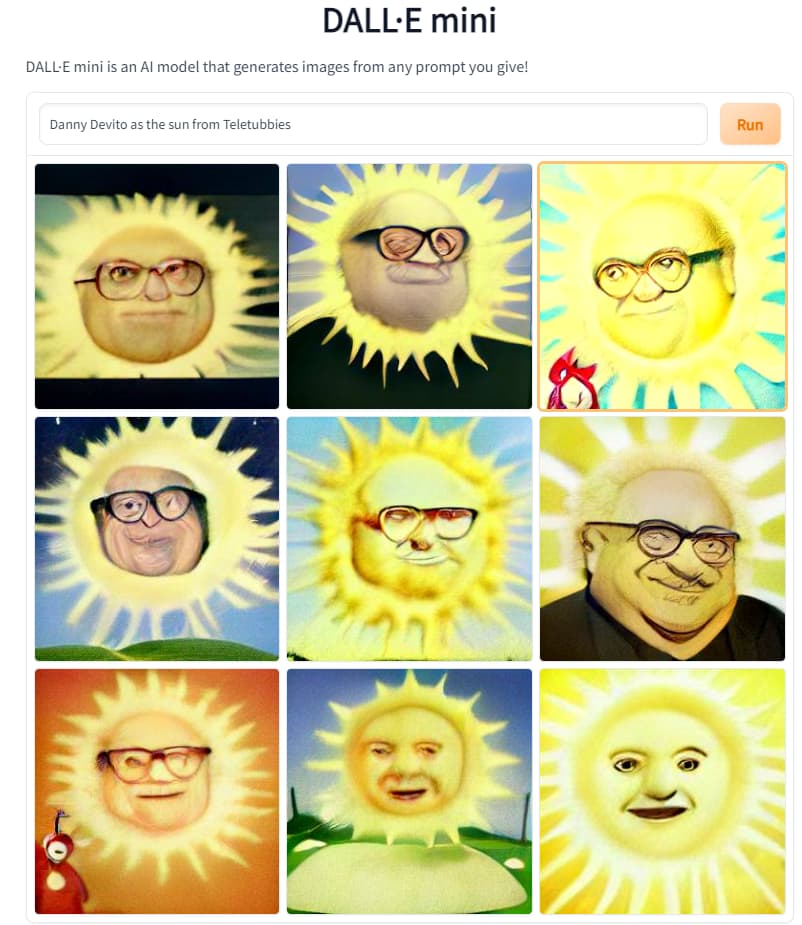
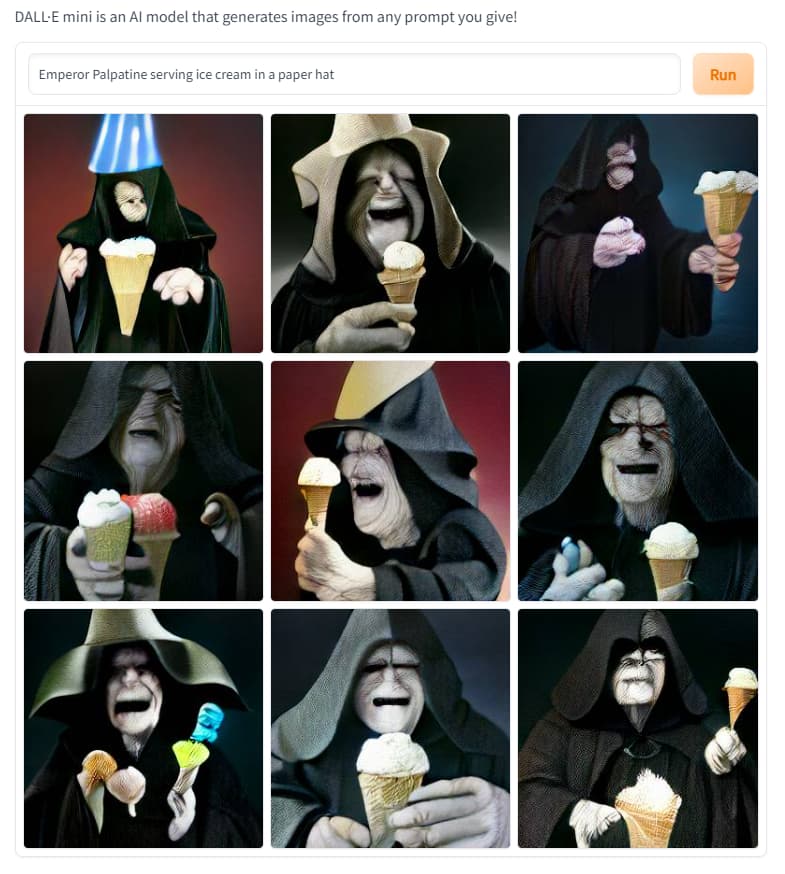
How uncanny is it that my random example of a crotchless dress happens to be a real thing that has relevance in the meme world?
Here's my take on how AI is (and is not) subversive: When we punch something into Dall-E, we have a vague idea of what we expect to come out the other end. To some extent, the joke has been made before the images are generated. To me, the appeal of Dall-E is that there is a wide variety of ways to subvert the monkey-brain-centric humor you're expecting when you read or write the prompt. Here are just a few of the variations I've thought of:
Images can remind you of certain things and invoke unrelated concepts in a way that can't be predicted or harnessed by the AI. For instance, the top-middle panel here mirrors "chad" iconography, which probably isn't intended by the person who typed the prompt or the bot but is nonetheless exploitable.
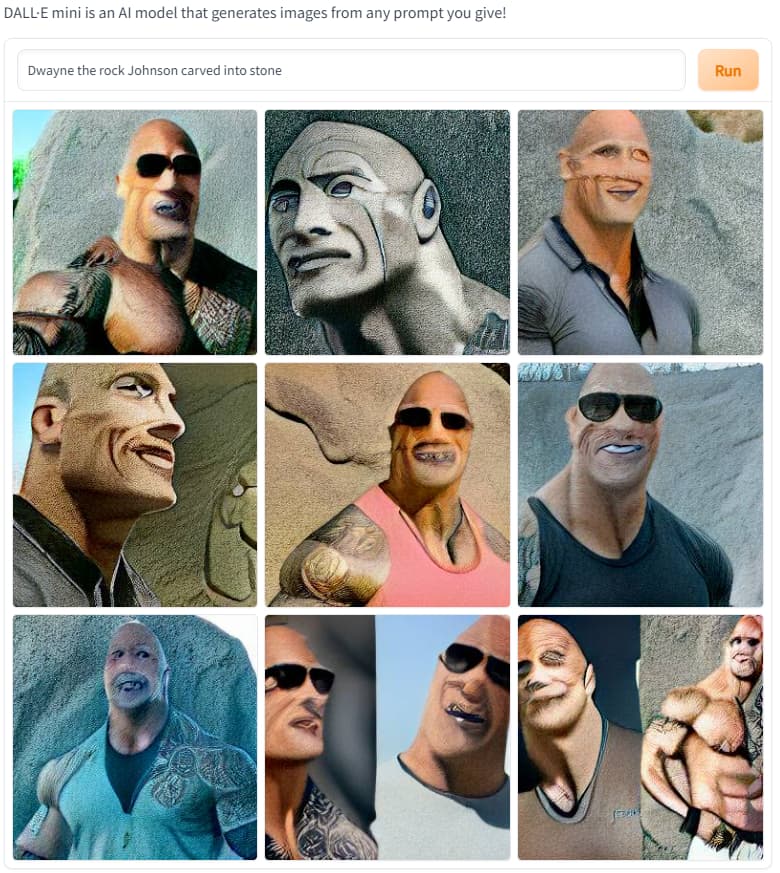
Some humor is derived specifically from the fact that the meme comes from a bot, which is both frighteningly intelligent and dumb. There's an element of "what does it know that we don't?", while still being naive enough to make your penis-headed man above. Like a fellow forum-poster posited, it is a context-dependent meme, not just regarding the potential subjects of the meme but the AI-generated format as well.
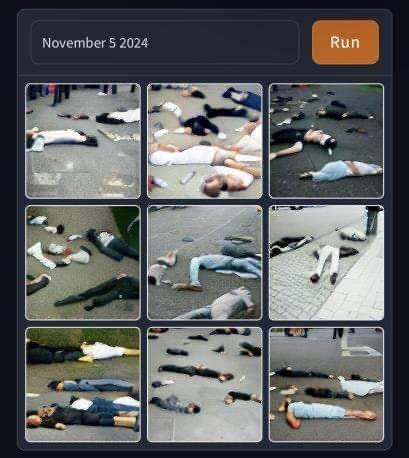
And of course, some humor can be derived from the fact that things just look silly. A word that keeps coming to mind is "skung", which was coined by the wonderfully aesthetic ThorHighHeels to describe weird, janky animation from the early years of 3D. Same sort of energy. There's also something kind of pleasant about our pattern-recognizing brains being able to recognize these distorted low-resolution representations. Maybe they aren't adequately realistic to dip into the uncanny valley.