Consider @squashwhack's point that memes are native to marketing:
I think that the discussions around "corporate memes" often get stripped of interesting insight because they almost always focus on "memes immediately recognisable as potential adverts".
This is a similar effect as when people talk about "leftist memes": most of the discussions focus on only the most ham-fisted and self-consciously "leftist" memes that fit the political quadrant stereotypes. This is in no small part a result of self-identifying leftists adopting a defensive attitude, uncritically buying into a definitional framework (about who they are as "The Left") provided by their opponents! Insofar as leftists keep doing this, they surely cannot meme; but internalised stereotypes are not unique to the left, and politics is rife with examples of iconographic symbioses, in which a Chad "YES" is integral to the neutralisation and reclamation of an enemy's own symbols.
If you are a right winger biased in the direction of "the left can't meme" who wants right wing memers to seem better than left wing memers, then you would be inclined to always contest the political nature of many memes with leftist ideological underpinnings, and filter them out from the sample. This metamemetic strategy goes hand in hand with hair-trigger reactions from conservative fans against (say) minority representation in films and movies. By systematically excluding political beliefs which they agree with from the realm of "politics", they attempt to exclude them from critiques on the grounds of "civility" which involves "keeping politics out of video games". The memetic refrain is telling: "they made it political!"
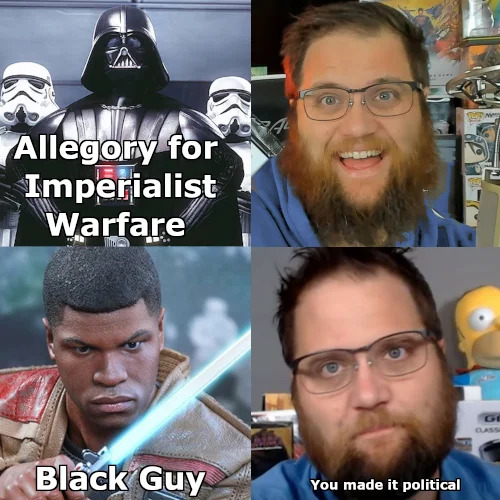
Obviously, the correct response is not to deny that media is political. It's to respond: "Yes. And?"